
It Took Me a Year to Get My First Physio Job — How I Could’ve Used LinkedIn.
It took me a year to secure my first physiotherapy post after graduating.
At the time, that felt like forever. I was keen to become a Band 5 physiotherapist, and like many new graduates, I was applying for jobs, going to interviews and wondering when someone was finally going to give me my chance.
But while I was waiting for that opportunity, I was actually building plenty of experience that would eventually help me get there. And I’ve got some tips for you.
Making the most of the opportunity in front of me.
My daughter had just been born, and I needed to earn. I became a Therapy Assistant on elective and trauma orthopaedics at Bradford Royal Infirmary. Actually, no. I was a ‘Trainee’ Therapy Assistant. Interestingly, I got the job because of the connections I'd made whilst on placement there. The team remembered me, and that really helped at my interview.
When I started, I gave my word that I wouldn't simply leave if a physiotherapy job came along shortly afterwards. I don’t think they’d have offered me the job otherwise. I was there to do the job properly, and although I was a Band 5 in waiting, I stayed within the scope of my Band 2 role while throwing myself into it.
My competencies extended beyond physiotherapy. I became a dab-hand with a shoe horn, sock aid and Easyreach demonstrations, much to the admiration of my retired Occupational Therapist mother-in-law!
The physios carried out the initial assessments, while I was part of a team carrying out mobility, exercises and stairs practice. We saw patients twice a day, I learned a huge amount about rehabilitation, and what happens after hospital.
I measured knee bends with my trusty goniometer, celebrated many a straight leg raise, and spent lunch breaks sawing walking sticks. Discharge checklists gave me structure and helped me contribute to both morning and afternoon handovers.
That experience taught me about patients, rehabilitation, ward working, MDT discussions, home visits and safe discharges. It also taught me what it felt like to be part of a team. We even had team nights out involving curry and dancing. I genuinely felt part of something.
And then there was one particularly memorable experience: having also been involved in home visits for those who needed their last few degrees of movement, the team and I ended up on the cover of Frontline, the magazine of the Chartered Society of Physiotherapy.
In one year, the project saved 2,315 bed days and more than half a million pounds for the Trust.
You can see below that I was listed as ‘Trainee Therapy Assistant.’ The lowest ranked in this image. That really didn’t matter. Even if my blue uniform did make me look like a dentist! I was understandably rather pleased with myself, and this was going to be an amazing talking point.
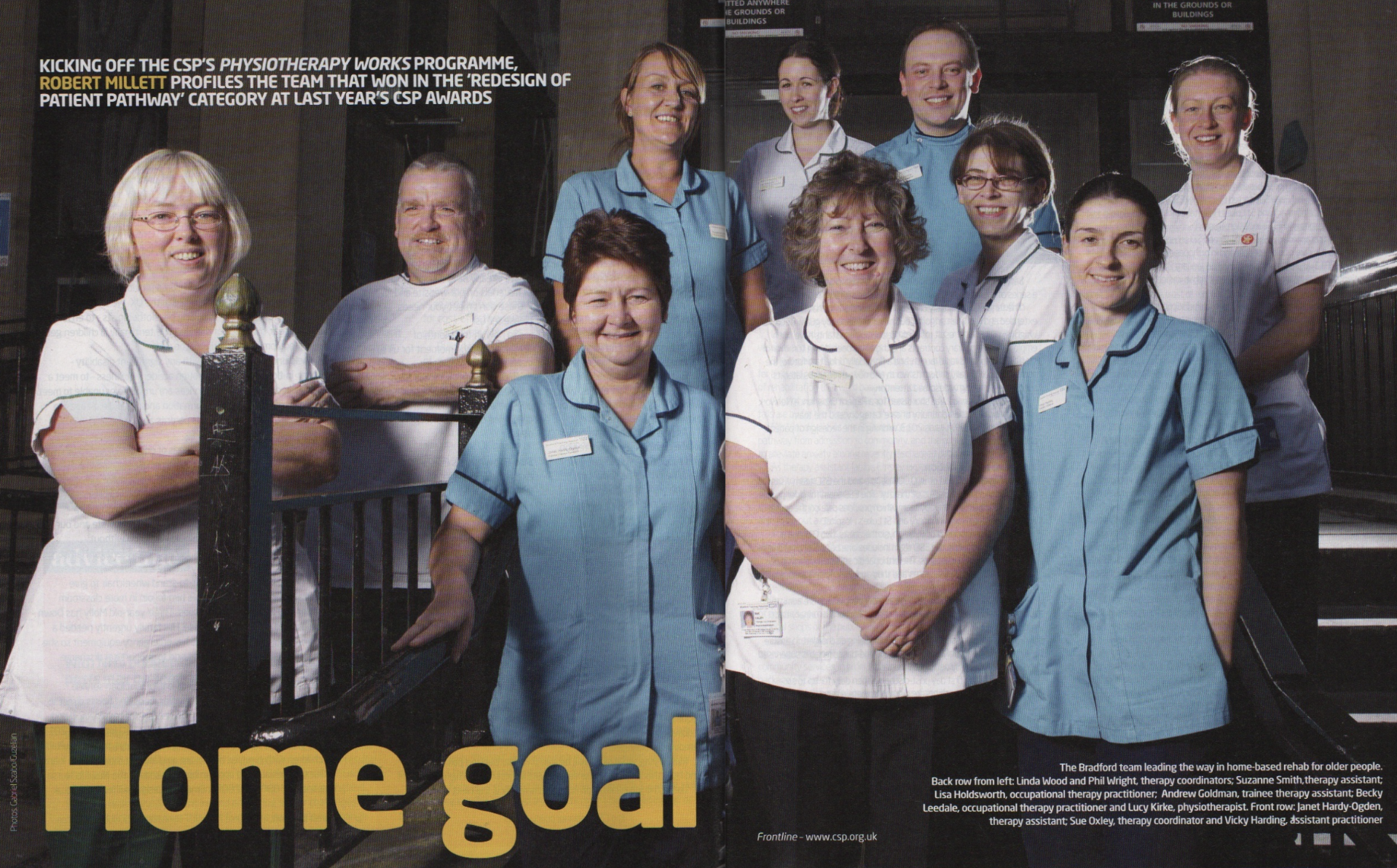
Team Ortho — Bradford Royal Infirmary
By the time my first physio interview came along...
I was desperate to tell them everything.
I'd spent a year gaining experience and collecting stories. I’d learned about working with patients following major surgery, rehabilitation, multidisciplinary teams and safe discharge. I’d seen the difference that small improvements could make to someone's confidence and independence.
And I’d been on the cover of Frontline.
I must’ve mentioned my ‘photoshoot’ at least three times during the interview. In fact, I know I did, because the interviewers told me!
But here's the thing.
Imagine if I'd been on LinkedIn throughout that year.
I could’ve documented all of those experiences as they happened.
Not by pretending to be an expert. Not by trying to impress people. Simply by sharing what I was learning.
I could’ve written about what I was learning from working on an orthopaedic ward, reflected on my experiences with patients, talked about the importance of multidisciplinary working, shared what home visits had taught me, and explained what I was doing to prepare myself for my first physiotherapy role.
It’s highly likely I’d have added the Frontline story to my Featured section!
All of those experiences were valuable, but at the time they mostly lived in my head. Some made it onto my CV and some came out during interviews, but many were probably forgotten over time.
Your CV can't tell the whole story.
This is one of the reasons why LinkedIn can be particularly useful for students and new graduates.
Your CV has to be concise. You need to include your qualifications, experience and relevant achievements without turning it into a ten-page autobiography.
But your professional journey is much bigger than your CV.
LinkedIn gives you somewhere to document the experiences that don't necessarily make the final cut. You can share reflections from placement, talk about a project you've worked on, explain something you've learned from a part-time role or celebrate an achievement.
You can also start building relationships with the people you meet along the way.
And that's important. I got my Trainee Therapy Assistant role partly because people I'd worked with on placement remembered me. I’d already started building a professional reputation before I had my first job.
You don't have to wait until you've got the job.
I think this is where students and new graduates can sometimes get stuck.
Feeling the need to wait for something impressive to announce before daring to post on LinkedIn. Waiting for graduation, a first job, or a first promotion.
But your professional story doesn't start when you get your first job.
It’s already started.
The placement where you made a great connection. The experience that changed how you think about patient care. The project you're proud of. The conference you attended. The challenge you overcame. The goal you're working towards.
These are all part of your story.
You don't need to present yourself as an expert. In fact, some of the most interesting things you can share are simply your reflections on what you're learning.
What I'd recommend if you're a student or new graduate.
If you're currently looking for your first role, I'd encourage you to start documenting your journey right away.
Here are a few simple ways to do it:
1. Reflect on your experiences.
After a placement, project or event, think about what you learned and why it mattered. Without sharing confidential patient information, you can talk about how your input made a difference.
2. Share your progress.
Working towards a goal? Tell people about it. Starting a new placement? Share what you're hoping to learn. Finished a project? Explain what you took from it.
3. Celebrate the small wins.
Your professional development isn't just the big achievements. A new skill, a useful conversation, or a moment when something finally clicked can all make interesting content.
4. Build and maintain your connections.
The people you meet on placement, at university, and at events, could become colleagues, mentors, employers or professional contacts in the future.
5. Keep a record of your experiences.
Don't rely on your memory when you eventually reach an interview. Documenting your journey means you'll have a bank of experiences and reflections to draw from.
6. Let people see where you're heading.
You don't need to have everything figured out. Sharing what you're interested in and the direction you'd like your career to take can help the right people find you.
Looking back, I wasn't waiting at all.
It took me a year to secure my first physiotherapy post, but I don't think of that year as a year wasted waiting for a job.
I was building relationships, gaining experience, learning about rehabilitation and becoming more confident working with patients and within a multidisciplinary team.
All of those experiences eventually helped me when I got my first physiotherapy role.
And if LinkedIn had been part of my professional life back then, I could have documented the lot.
That's what I'd encourage students and new graduates to do today.
Don't wait until you have the job to start telling your professional story.
You've already got plenty of stories worth telling.
P.S. I’m going to share my Frontline article for a 4th time!
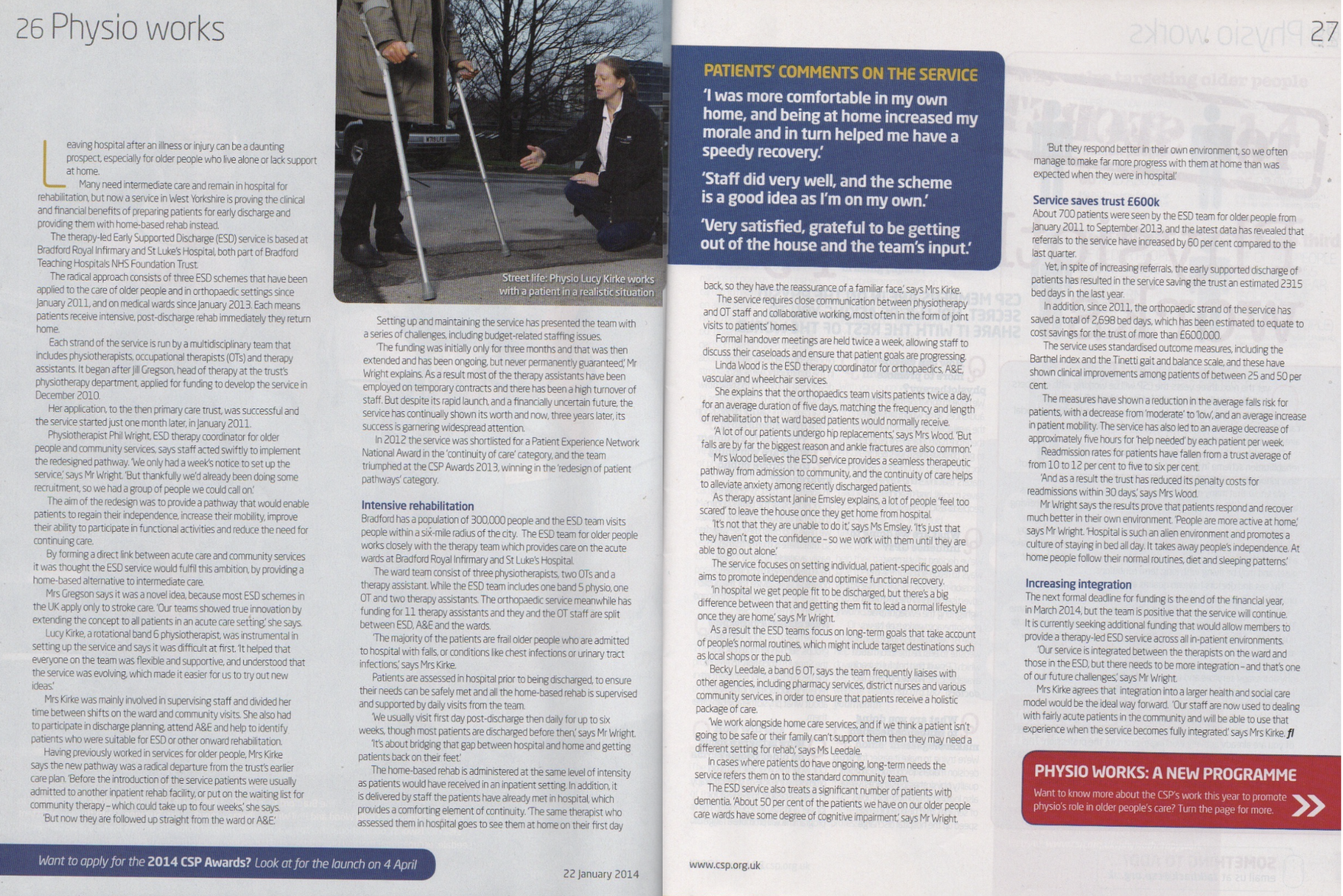
Frontline Article about Bradford's award-winning rehabilitation team from 2014.