
Standing Out on LinkedIn: AHP Stories #1 — Ricky Parrish
From student to newly qualified physio: how Ricky Parrish used LinkedIn to stand out
You don't have to wait until you qualify to start building your professional reputation. Ricky Parrish's LinkedIn journey is a great example of what can happen when you start early.
I'd heard of Ricky Parrish long before he became a newly qualified physiotherapist. I hadn't met him. We hadn't worked together. I'd never taught him. I knew him because I'd seen him on LinkedIn.
Ricky was still a student when I first came across his content. He was sharing reflections from his physiotherapy journey, talking about things he'd learned and engaging with other people in the profession. And that's what caught my attention. Not the number of followers he had. Not because he was trying to position himself as an expert. Simply because he was visible.
Fast forward to now, and Ricky has graduated and started working in the private sector. His LinkedIn presence has continued to develop, and I think his journey offers some really useful lessons for students, new graduates and experienced healthcare professionals alike.
There's another reason Ricky caught my attention.
I recently searched for his name on Google.
I didn't type ‘Ricky Parrish physiotherapist.’
I didn't type ‘Ricky Parrish physio.’
I just typed:
‘Ricky Parrish.’
His LinkedIn profile appeared at number one.
That's not the reason I think Ricky's LinkedIn journey is interesting. It's actually the result of something much more valuable.
He started building his professional reputation before he needed it.
So, I asked Ricky to tell me how it all started.
From corporate LinkedIn to physiotherapy
"As a mature student, I had a decade or so's worth of experience behind me working in more corporate B2B environments, managing international shipping and product development for B2B distributors and direct to consumer commerce companies.
Naturally, I had historically been on LinkedIn but never really with much intent. I just thought of it as basically an online CV and Facebook for salespeople, and since I was trying to get out of the corporate world, deleting my LinkedIn profile was something I did quite quickly."
I think this is a brilliant place to start because I suspect Ricky's initial view of LinkedIn is shared by a lot of healthcare professionals.
"It's just an online CV."
If that's all you think LinkedIn is, there's not much reason to spend time on it until you're looking for a job.
But Ricky's mindset changed.
He began to see LinkedIn not as somewhere to store his professional history, but as somewhere he could build relationships, develop his professional reputation and create opportunities.
And that's a much more useful way of looking at the platform.
Starting before graduation
Ricky's LinkedIn journey properly began towards the end of his second year.
"I'd just completed 2 placements in paediatrics and MSK. During my MSK placement, the other student on my placement was telling me that he was using LinkedIn and had already connected with the majority of our educators and colleagues on that placement.
This made perfect sense really, why wouldn't I find a means of keeping up connections with the people I've been on placement with?
Having heard many whispers a difficult climate in the job market, I figured that it probably wasn't good enough to just be a standout student on placement (there will be plenty of those to dilute my efforts), but I should use LinkedIn to leverage those contacts and remain memorable to them."
This is probably the biggest lesson I'd take from Ricky's story.
He didn't wait until he needed LinkedIn.
He started using it while he was still learning.
I've spoken to plenty of students who tell me they'll sort their LinkedIn profile out when they're closer to graduation. Or when they're applying for jobs. Or when they've got something "worth posting about".
But by then, you're starting from scratch.
Ricky had already spent time building relationships and developing his voice. He'd already given people a reason to remember him. And you don't have to become a LinkedIn content creator from your first week at university to do this.
Starting early could simply mean connecting with your placement educators, following clinicians whose work interests you, commenting on posts that genuinely teach you something, sharing something you've learned or reflecting on an experience.
You don't need thousands of followers. You just need to start.
Recognition and opportunity
Ricky says the biggest thing he's got from LinkedIn is recognition and opportunity.
Importantly, he's not claiming that LinkedIn got him his job.
"I don't think it has directly contributed to having gained employment as it stands, but for me I don't really treat LinkedIn as an online cv anymore, which is essentially what it was in my past career.
For me, its an important tool that I've used to connect with thought leaders and influential clinicians in our profession."
I really like Ricky's honesty here.
It's tempting when talking about LinkedIn to make everything sound like a straight line:
Used LinkedIn → got job.
But that's not how professional networking usually works. Ricky talks about recognition and opportunity instead. He's listened to podcasts with influential people in the profession, contacted them to discuss their areas of interest and even invited some of them to speak at his university.
"Opportunities that would not have happened without LinkedIn and a little bit of confidence."
That's networking. Someone knows who you are. You know who they are. You've had a conversation. You have something in common. And sometimes, something happens that you couldn't have planned for.
Importantly, Ricky isn't just collecting connections.
He's having conversations.
That's a distinction worth remembering.
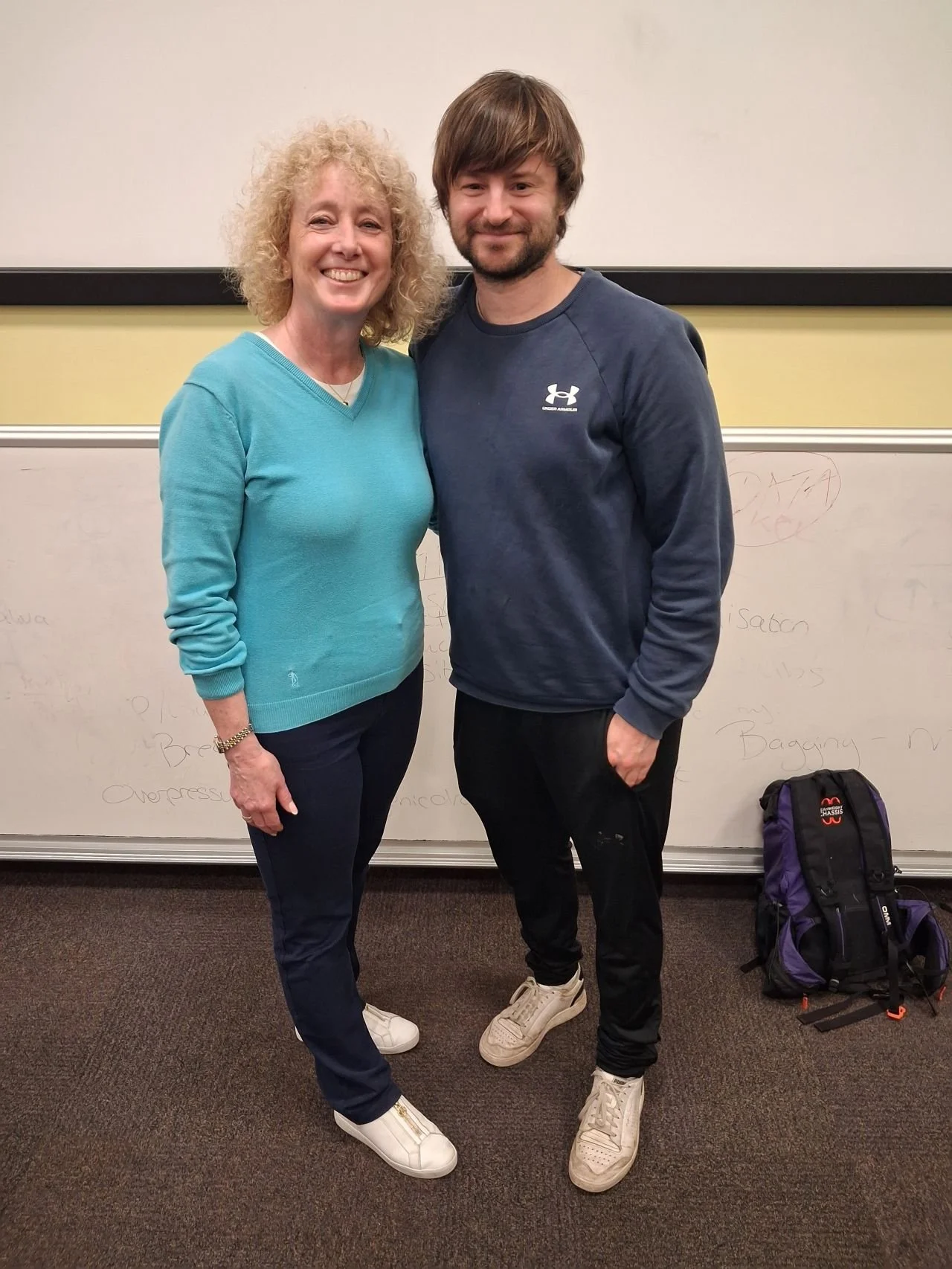
And here he is rubbing shoulders with Jo Gibson — Consultant Shoulder Physiotherapist.
Being clinically curious
Another thing that stands out about Ricky's LinkedIn presence is the type of content he shares.
"Now I use LinkedIn to post some of my clinical, evidence-based reflections and I've started building some infographics to highlight some of my findings and interpretations as I continue to read and dissect physiotherapy evidence and continue to be clinically curious.
Essentially that is what drives my content, whatever interests me clinically I'll read about and try to write about and hopefully trigger some conversations."
I think this is one of the strongest aspects of Ricky's approach.
He's not trying to pretend he's an expert.
He's documenting his curiosity.
He's reading something because it interests him. He's thinking about it. He's trying to understand it. He's creating an infographic or writing a reflection. Then he's putting that thinking out into the world.
And he's honest about the fact that doing this can be daunting.
"I still expect more experienced and knowledgeable clinicians and researchers to pop up and tell me that my work is completely incorrect, but that hasnt happened yet. I welcome that though as it will challenge me as a clinician to dig deeper."
That attitude is refreshing.
You don't need to have all the answers before you start sharing your thoughts.
You can share what you're learning.
You can say what surprised you.
You can talk about something you're still trying to understand.
You can ask questions.
In fact, some of the best student content I've seen on LinkedIn comes from people who are willing to say, "This is what I've learned, and this is what I'm still figuring out."
Ricky is also creating a digital trail of his professional development.
Someone looking at his profile today can see much more than a list of qualifications and placements. They can see how he's thinking.
And that's valuable.
Your LinkedIn profile is more than your CV
Which brings me back to that Google search.
LinkedIn profiles can appear in search engine results, so your profile can become part of your wider online presence. Ricky is a great example of why that's worth thinking about.
Imagine you're a potential employer. You receive an application from Ricky and decide to Google his name.
You don't just find a CV-style list of qualifications. You find years of clinical reflections, evidence-based thinking, professional conversations and evidence of someone who is genuinely interested in developing as a clinician.
That's a much richer picture of the person.
Now, I'm not suggesting that every AHP student needs to become obsessed with appearing at number one on Google. That's not the point. The point is to think about what someone might find if they search for you.
What does your online presence say about you?
Ricky's advice to current students
When I asked Ricky what advice he'd give to current students, his answer was simple:
"My advice to current students is to just start early. Dont wait until you've graduated to start networking and having discussions with experienced and knowledgeable clinicians and thought leaders in your profession."
He's yet to find anyone who's been rude or disinterested, and he believes those conversations can help develop both clinical reasoning and career aspirations. But again, Ricky is realistic about what LinkedIn can and can't do.
"I can’t say that having a presence on LinkedIn will guarantee you job prospects, but it will certainly make you more visible and will develop your insight as a clinician and I believe will ultimately be worthwhile."
I'd underline almost every word of that.
Particularly:
Just start early.
Don't worry about having the perfect profile.
Don't worry about becoming a thought leader.
Don't worry about how many people are following you.
Start by being interested in people.
Find clinicians doing work that interests you. Follow them. Read what they're sharing. Ask questions. Connect with people you've met on placement. And when you have something worth saying, say it.
Your professional reputation isn't something you suddenly switch on when you graduate.
You're already building it.
The LinkedIn feature Ricky values most
I asked Ricky which LinkedIn feature he finds most useful.
His answer?
"Probably a bit of an old school answer, but I think simply being able to message people directly is pretty great and has afforded me the most amount of opportunity of all."
I love that this is his answer.
Not some fancy new feature.
Messaging.
Because ultimately, LinkedIn is a networking platform.
The technology makes it possible, but the relationships are still human.
If there's one thing I'd encourage more healthcare professionals to do, it's to become comfortable with sending a good message.
For example:
"I listened to your podcast on X and really enjoyed your thoughts on Y. I'm currently studying physiotherapy and it's something I've been thinking about during my placement..."
That's a conversation.
And conversations are where opportunities start.
Who does Ricky recommend?
Ricky's recommendation is Priya Physio.
"She is doing some great work in leadership and employment and is just a great all round person to know."
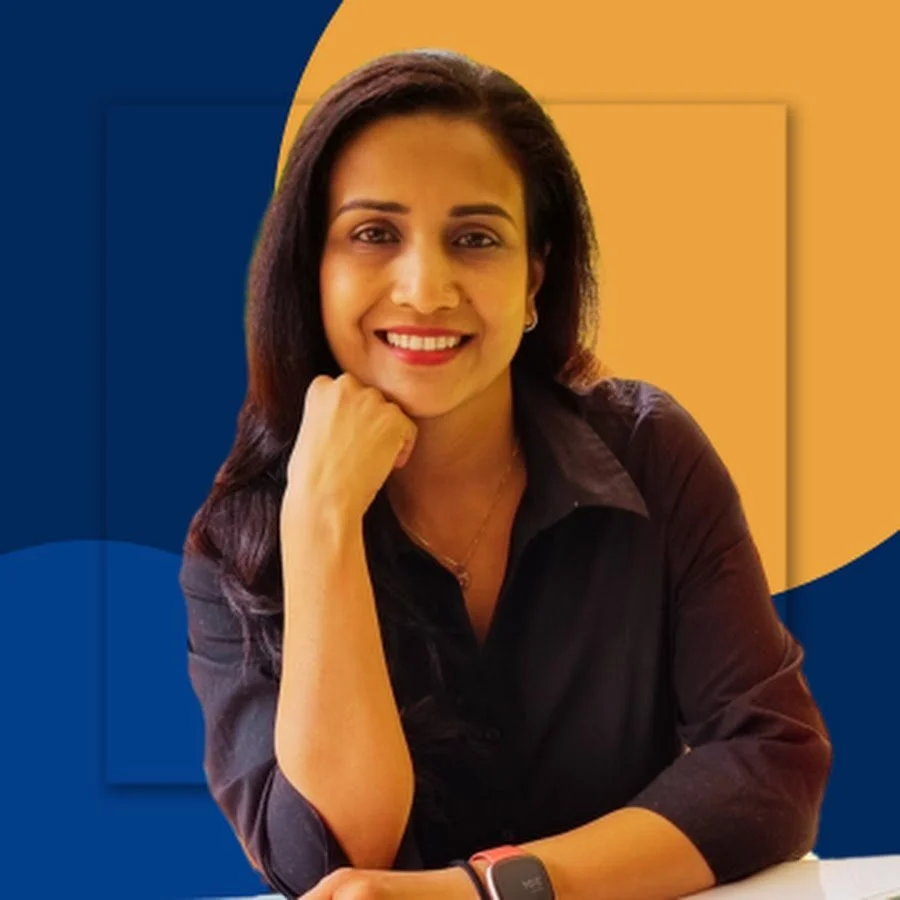
Priya Physio.
That's another useful reminder.
Your LinkedIn network doesn't need to consist entirely of people you already know.
You can build a network around your interests and aspirations.
If there's a clinician, researcher, educator or business owner whose career interests you, follow them.
Learn from them.
Engage with their content.
And if you have something genuine to say, start a conversation.
Key takeaways from Ricky's LinkedIn journey
Ricky's story isn't really about getting a job through LinkedIn. In fact, he's very clear that he doesn't think LinkedIn directly contributed to his employment.
I think that's what makes the story more interesting.
It's about something broader: building a professional reputation before you need it.
Here are the five things I'd take from Ricky's journey:
1. Start before you need something.
Don't wait until you're job hunting to build your network. Build relationships while you're learning.
2. Share what you're learning.
You don't need to be an expert. Your curiosity can be your content.
3. Make yourself memorable.
Being good on placement is important. But staying connected with the people you've met can help you remain memorable after you've left.
4. Have conversations, not just connections.
A connection sitting in your network isn't necessarily doing anything. Talk to people. Ask questions. Be interested.
5. Think about what people find when they Google you.
Your LinkedIn profile can become part of your wider professional reputation. Make sure it tells the story you want people to see.
One final thought from me
I chose Ricky as the first featured person for The LinkedIn Physio because I think his story demonstrates something I genuinely believe about LinkedIn.
You don't need to be famous to stand out.
You don't need thousands of followers.
You don't need to post every day.
You don't even need LinkedIn to directly get you a job.
You need to be visible, curious and willing to connect with people.
Ricky started using LinkedIn as a student because he realised that simply being good on placement wasn't necessarily enough.
Since then, he's built a network, started conversations with people he admires, shared his clinical thinking and developed a professional presence that now extends beyond LinkedIn itself.
And somewhere along the way, the guy who once thought LinkedIn was basically "an online CV and Facebook for salespeople" ended up with his LinkedIn profile sitting at number one when you Google his name.
Not bad for a new graduate.
And perhaps the biggest lesson of all?
You don't have to wait until you're qualified to start building your professional reputation.
You can start now.
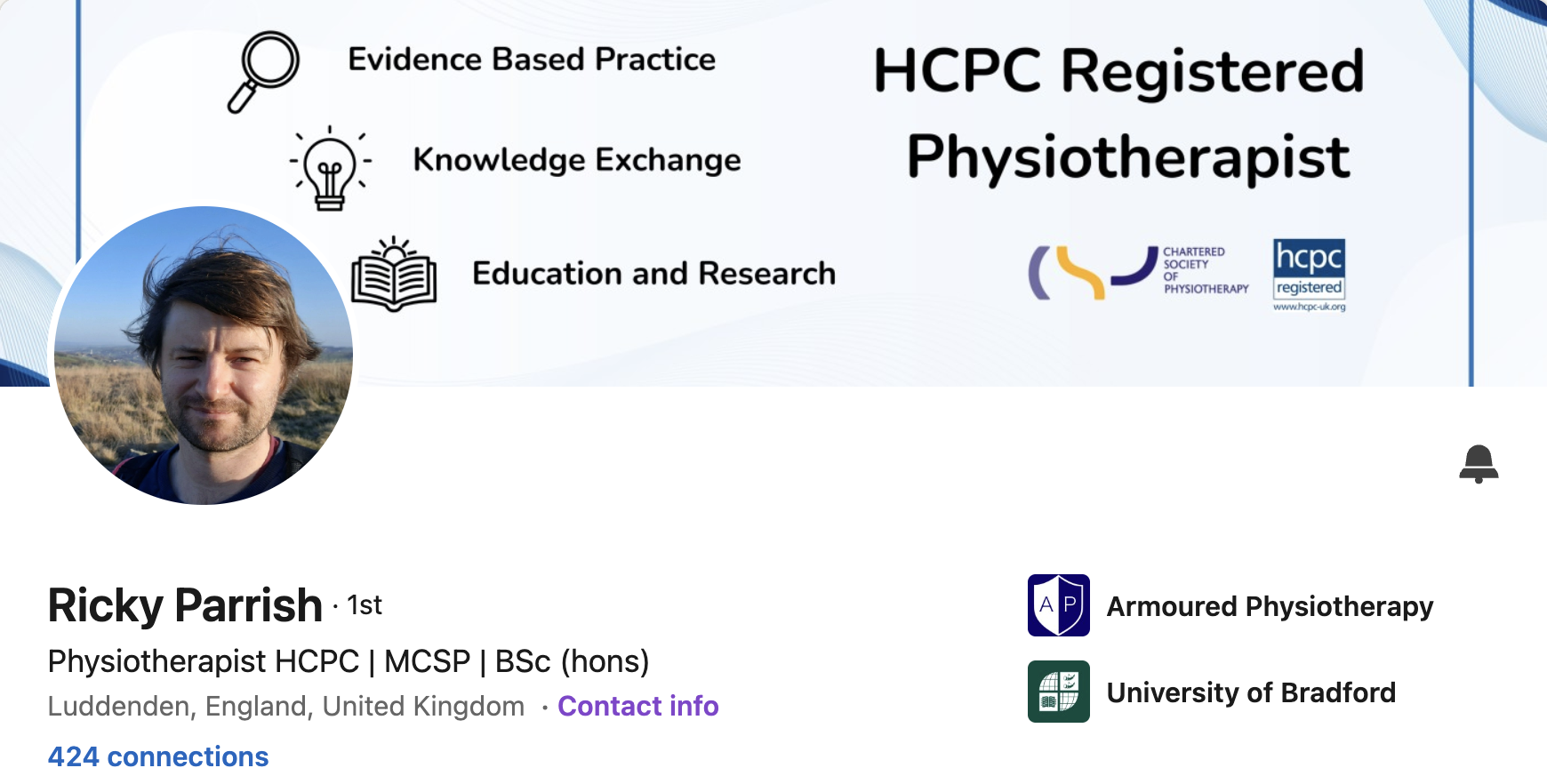
Ricky Parrish’s LinkedIn Profile — click on the image to connect with Ricky.