
Standing Out on LinkedIn: AHP Stories #2 — Thalia Lau
If you’ve spent any time around physiotherapy students on LinkedIn, there’s a good chance you’ve come across Thalia Lau. That’s exactly how I found her!
Thalia recently graduated as a physiotherapist and was named the CSP’s Student Influencer of the Year 2026 — recognition of the contribution she made to the profession during her time as a student.
But what I find particularly interesting is that Thalia didn’t set out to become an ‘influencer’. She created her LinkedIn account almost on a whim, while sitting in a physiotherapy lecture with friends.
What followed was a journey from simply having a professional profile, to documenting her student experience, connecting with the profession, sharing opportunities and finding her voice.
I asked Thalia seven questions about her LinkedIn journey — from why she started, to what she’s learned, and how she sees LinkedIn fitting into her career now that she’s graduated.
P.S. These are all her words, not mine. I don’t mess with words as good as these.
Take us back to when you were a student. What made you start using LinkedIn, and what did you hope it might do for you?
‘Honestly, I created my LinkedIn account quite randomly! I was sitting in a physiotherapy lecture with a few friends and, almost on a whim, we decided that we should all make LinkedIn accounts. At the time, I definitely didn’t think it would become such a big part of my student experience.
Initially, I saw LinkedIn as somewhere to have a professional profile and keep a record of the things I was doing alongside my degree. I wasn’t thinking about building a personal brand, becoming an “influencer” or even posting particularly regularly. I just thought it would be useful to have a presence there as a student physiotherapist.
As I became more involved in things outside university and my clinical placements, that started to change. I realised LinkedIn could be a way of sharing the things I was learning, celebrating opportunities, connecting with other people within the profession and learning from others too.
I started posting about my experiences, projects, conferences, student representation and my involvement with organisations such as the CSP. But I also started sharing smaller things - things I had learned, reflections from experiences and opportunities I thought other students might find useful. I think that’s when LinkedIn started to feel less like an online CV and more like a professional diary.
Sometimes I look back at things I posted earlier in my degree and realise how much I’ve changed since writing them. In a way, my LinkedIn has become a record of my journey through physiotherapy - not just the achievements, but the things I was thinking about and learning at different points along the way.
The more I used it, the more I realised that you don’t necessarily need to wait until you’re qualified to contribute to the profession. As a student, you have your own experiences and perspective that can be valuable too.
Looking back, it’s quite funny that something I started during a lecture almost as a joke with friends became something that has had such a significant impact on my student experience and professional development.’
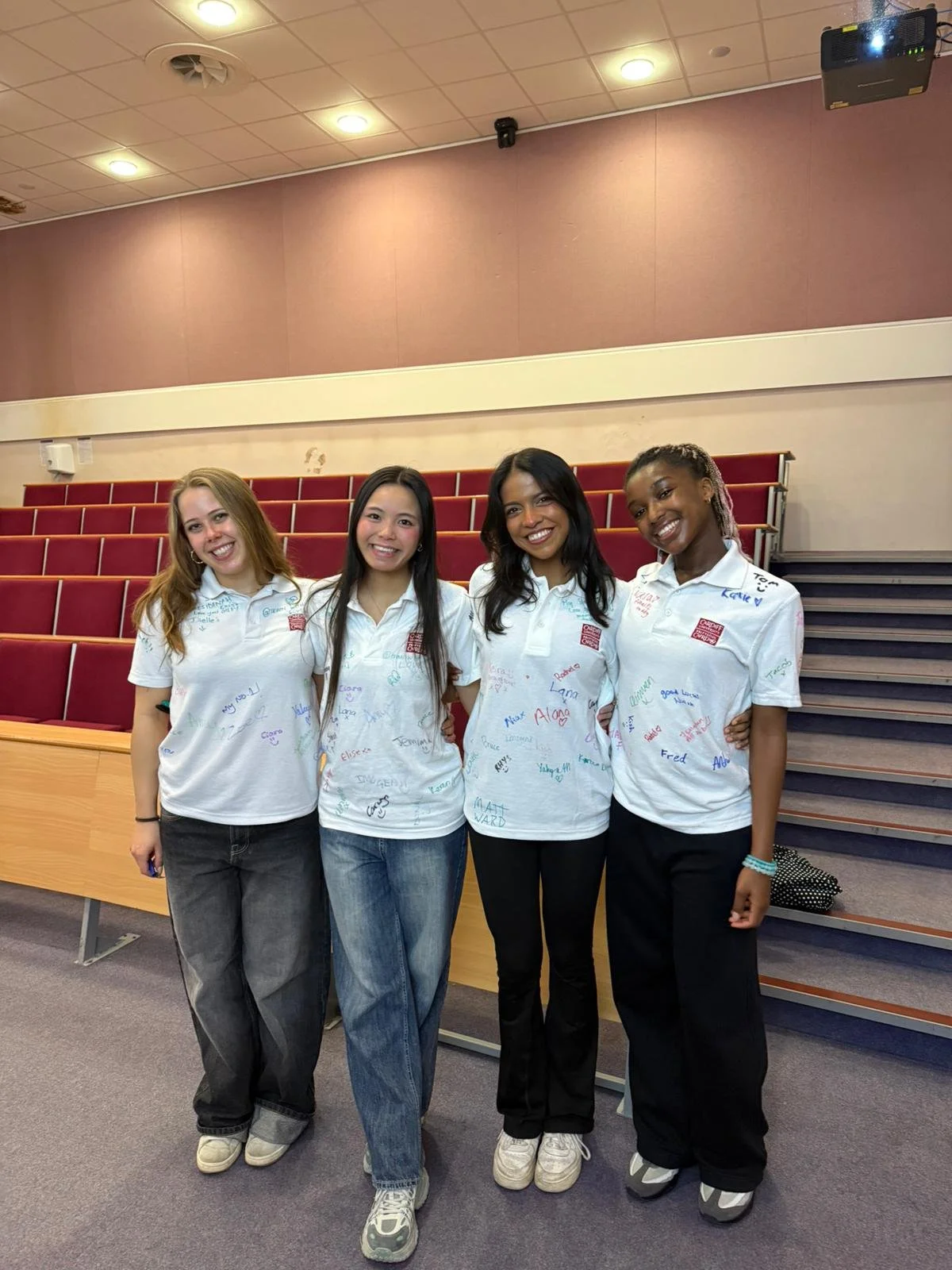
Thalia (2nd from left) with friends from her cohort.
At some point, you came across The LinkedIn Physio and my content. How did you discover me, and what made you decide to connect or engage with what I was sharing?
‘I came across The LinkedIn Physio as I became more active on LinkedIn, and I think what initially drew me in was that your content made LinkedIn feel much more relevant to physiotherapy students and new graduates.
What I particularly liked was the idea of LinkedIn being almost like a professional diary - somewhere to document your thoughts, experiences, lessons you’ve learned and opportunities you come across, rather than just an online CV.
That really resonated with me. I’ve always enjoyed reflecting on experiences, and I liked the idea that sharing something that had been meaningful to me might also be useful or reassuring to someone else going through a similar experience.
I also found your content very practical. There can be a lot of advice about “networking” and “building your personal brand”, but that can feel quite intimidating when you’re a student and don’t necessarily see yourself as someone with a platform. Your content made it feel much more accessible.
It helped me realise that LinkedIn doesn’t have to be about trying to look impressive. It can simply be about being curious, sharing what you’re learning and connecting with people.’
You were recently named the CSP’s Student Influencer of the Year 2026. Can you talk us through what happened — from being nominated, to finding out you’d been shortlisted, to actually winning the award?
‘This is probably one of the things that still feels the most surreal to me, because I genuinely never thought of myself as an “influencer” - and I’m actually quite shy!
I knew I had become involved in quite a lot during my time as a student, particularly through the CSP. I was a CSP student rep, became involved with the Student Advisory Group and Diversity Networks, contributed to events and webinars, and had opportunities to write for Frontline and speak at different events. But I never started doing any of those things thinking that one day I would receive an award for them.
So when I found out I had been nominated for Student Influencer of the Year, I was incredibly grateful and quite surprised. Then finding out I had been shortlisted was another moment where I thought, “Is this actually happening?”
And then I won!
It was such a special moment because, for me, the award represented much more than LinkedIn or social media. It felt like recognition of the wider journey I had taken as a student - finding my voice, getting involved in the profession, sharing opportunities and trying to make a positive contribution wherever I could.
In some ways, LinkedIn helped me find a voice in a way that felt comfortable for me. I’m quite shy, and I probably wouldn’t have considered myself someone who naturally takes up a lot of space in a room. But writing gave me a way to express my thoughts, reflect on experiences and connect with people. Over time, that made me much more confident about sharing my ideas in other settings too.
I was also really proud that my friend and fellow Cardiff University graduate Dielle DeSouza was recognised at the same awards, having been commended for Student Volunteer of the Year.
One of the things I’ve found most meaningful throughout this whole experience is realising that people actually read and value the things I share. I’m always genuinely grateful when someone interacts with one of my posts, and some of the heartfelt comments people have left have really stayed with me. I still have moments where I’m surprised that someone found something I posted useful enough to stop, read it and take something from it.
There have also been opportunities and conversations that came from simply putting myself and my experiences out there. Sometimes I’ve looked back and thought, “If I hadn’t shared that, I’m not sure this conversation would ever have happened.” That has made me realise that you never really know who your content might reach.
So winning the award was incredibly special, but I think the biggest lesson for me has been that you don’t always see the impact you’re having while you’re doing something. You just share what matters to you and hope that it might help someone.’
You’ve now graduated as a physiotherapist and are looking for your first Band 5 post. How has life — and your use of LinkedIn — changed since becoming a graduate?
‘Graduating has definitely changed the way I use LinkedIn. As a student, a lot of my posts were about student experiences, placements, university opportunities and getting involved with the profession. Now that I’ve graduated, I’m starting to think much more about the transition into practice and what I want my career to look like.
I’m currently looking for my first Band 5 physiotherapy role, so LinkedIn has become particularly useful for understanding what different trusts and services offer, hearing from physiotherapists working in different areas and keeping up with opportunities.
At the same time, I’m conscious that I don’t want my LinkedIn to become purely about job hunting. I still want it to reflect who I am as a physiotherapist and the things I care about professionally.
I’ve also realised that the network I built as a student doesn’t disappear when you graduate. If anything, it becomes even more valuable. People I met through CSP activities, conferences, university and LinkedIn are now physiotherapists and professionals across different areas of the profession. I feel really lucky to have built those connections before graduating.
I also think being a new graduate gives me a different perspective to share. I can talk honestly about the transition from student to newly qualified physiotherapist, applying for Band 5 jobs and figuring out what comes next. Hopefully, that can be useful to other students who will eventually go through the same process.’
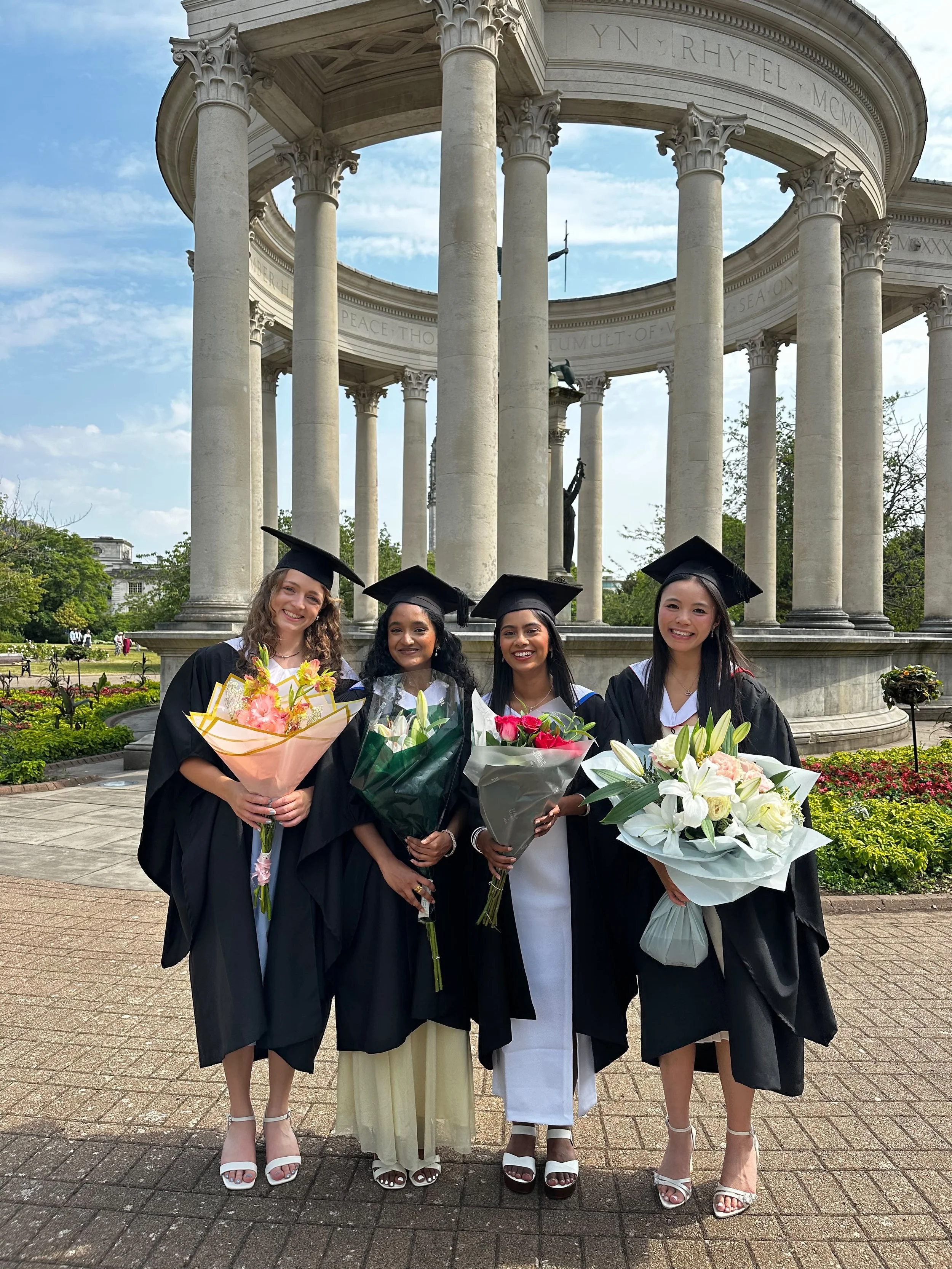
Thalia (furthest right) celebrating graduation with friends from her cohort.
Looking ahead, what role do you think LinkedIn will play in your career, and what would you say to another physio student or new graduate who isn’t sure whether being active on LinkedIn is worth their time?
‘I think LinkedIn will continue to be a way for me to learn, connect and contribute throughout my career. I don’t see it as something that is only useful when you’re looking for a job.
Physiotherapy is such a broad profession, and there are so many areas that you might not even know exist as a student. Following people working in different specialties has helped me understand different career paths and opportunities that I wouldn’t necessarily have encountered through university or placements.
One example that really showed me the value of LinkedIn was the creation of the “From Experience to Empowerment” webinar series. The idea actually started quite simply. At the CSP Annual Representative Conference, I approached the BAME Network with a small idea that I wanted to implement. They were really supportive and helped with the logistics of making it happen.
I then managed to involve two other co-chairs who helped me with some of the smoothing out of the sessions and shaping how we delivered them. It became a really collaborative effort, which I think made the series much stronger.
LinkedIn became useful not just for promoting the webinars, but also for helping us build them. We were able to discover and connect with potential speakers through the platform, start conversations with people we may not otherwise have crossed paths with, and then use LinkedIn to promote the sessions and encourage people to participate.
Seeing people engage with the posts and then actually attend the webinars was really rewarding. It showed me that LinkedIn can be much more than a place to talk about yourself or your achievements. It can help you turn a small idea into something tangible, connect people with each other, bring different voices into a conversation and create opportunities for others.
I’d also say that you don’t need to become a huge content creator or post every day. I think that can actually put people off. You can get value from LinkedIn simply by following people, reading posts, asking questions, commenting on things you find interesting and occasionally sharing something you’ve learned.
And if you do want to post, I’d say don’t wait until you think you’re “experienced enough”. Some of my favourite posts have come from experiences I had as a student. You don’t need to position yourself as an expert. You can simply share what you experienced, what you learned and what you think other people might find useful.
I also think one of the biggest mistakes is feeling like every post has to be impressive. It doesn’t. Sometimes the most meaningful thing you can share is something small that you learned or something that made you think.
For me, LinkedIn has worked because I’ve treated it as an extension of my professional journey rather than as a performance. I think that’s the biggest thing I would encourage other students to remember.’
What LinkedIn feature do you most value, and why?
‘I think the ability to connect with and follow other people is probably what I value most.
As a student, your professional world can feel quite small. You have your university, your placement educators and the people you meet through your course. LinkedIn opened that up for me. I could follow physiotherapists working in completely different specialties, connect with students at other universities, learn about organisations I hadn’t previously heard of and see conversations happening across the profession.
But one thing I particularly value is following my peers.
I find it genuinely inspiring to see other students and new graduates sharing what they’re doing, celebrating their achievements and pursuing things they’re passionate about. I love being able to cheer people on, congratulate them and support their posts.
I think it’s really important not to view LinkedIn as a competition. Someone else getting an opportunity doesn’t take an opportunity away from you. I genuinely want to see my peers do well, and I think there’s something really lovely about being able to celebrate each other’s successes.
Some of my favourite moments on LinkedIn aren’t actually when someone engages with my own post. They’re when I see someone I know achieve something and get to be one of the people cheering them on.
I also really value being able to share posts and experiences. It means that something you’ve learned or an opportunity you’ve discovered can potentially reach people you would never have spoken to otherwise.
A good example of this for me has been the CSP Cymru/Wales LinkedIn group. I first met members of the Welsh Board at the CSP Annual Representative Conference, then connected with them on LinkedIn and joined the Wales/Cymru group. Through those connections, I eventually had the opportunity to become a Graduate Representative on the Welsh Board.
I really value the CSP Wales/Cymru group because it helps increase the profile of physiotherapy in Wales and, importantly, gives physiotherapists in Wales a space and a voice. I think that’s a really powerful example of how LinkedIn can help strengthen a professional community, rather than just individual profiles.
And probably the most rewarding part is when someone takes the time to comment or message me to say that something I shared helped them. I’m still surprised by that sometimes. You can post something and move on with your day, without realising that someone else might have really needed to see it.
One of my favourite examples of this was when I wrote a post about “staying connected to my roots.” I expected it to be a personal reflection, but it received much more interaction than I anticipated. A few people even messaged me privately to say that they found it moving and that it had given them confidence.
Those messages really stayed with me. I’m often surprised that people even find what I share useful, so hearing directly from someone that a post resonated with them is much more meaningful to me than simply looking at the number of likes.
That’s what I value about LinkedIn — you never really know who your words might reach, or where a simple connection might lead.’
Who would you recommend your peers to follow on LinkedIn, and why?
‘I’d definitely recommend following a mixture of individual physiotherapists, professional organisations and people working in areas you’re interested in, rather than just following people who have the biggest audiences.
Obviously, I’d recommend The LinkedIn Physio because the content is particularly useful for students and new graduates who are trying to understand how to use LinkedIn and navigate the profession.
I’d also recommend following the Chartered Society of Physiotherapy and the different CSP networks, because there are so many opportunities, events, campaigns and resources shared through them. For students, it’s a great way of finding out what is happening within the profession and getting involved beyond university.
Beyond that, I’d encourage people to search for physiotherapists working in areas they’re interested in. If you’re interested in MSK, respiratory, paediatrics, neuro, research, leadership or anything else, find people actually working in those areas and see what they talk about. You might discover a career path you hadn’t even considered.
And, as I said before, don’t underestimate your peers. Some of the people I’ve connected with through university and the CSP are now doing really interesting things themselves. Following your peers means you get to learn from them, celebrate their successes and support each other as you progress.
I think that’s one of my favourite things about LinkedIn. Your network doesn’t have to be about what someone can do for you. Sometimes it’s simply about being part of a community and wanting to see other people succeed too.’
The key takeaways I’ve learned from hearing Thalia’s LinkedIn journey:
You don’t need a grand plan to start.
Thalia created her LinkedIn account almost randomly — and it gradually became a significant part of her student experience.LinkedIn can be more than an online CV.
For Thalia, it became a professional diary: somewhere to document experiences, reflections, learning and the journey through physiotherapy.You don’t have to be an expert to have something worth sharing.
Thalia believes students already have experiences and perspectives that can be valuable to others.You don’t need to become a content creator to get value from LinkedIn.
Following people, reading, commenting, asking questions and occasionally sharing something you’ve learned can all be worthwhile.Your network doesn’t stop being useful when you graduate.
Thalia describes the connections she built as a student as something that has become even more valuable as she enters professional life.LinkedIn can create opportunities for other people, too.
Her experience with the “From Experience to Empowerment” webinar series showed her how LinkedIn could help find speakers, build conversations and turn an idea into something tangible.Your network isn’t just about what people can do for you.
Thalia puts real value on following her peers, celebrating their successes and being part of a professional community — rather than viewing LinkedIn as a competition.
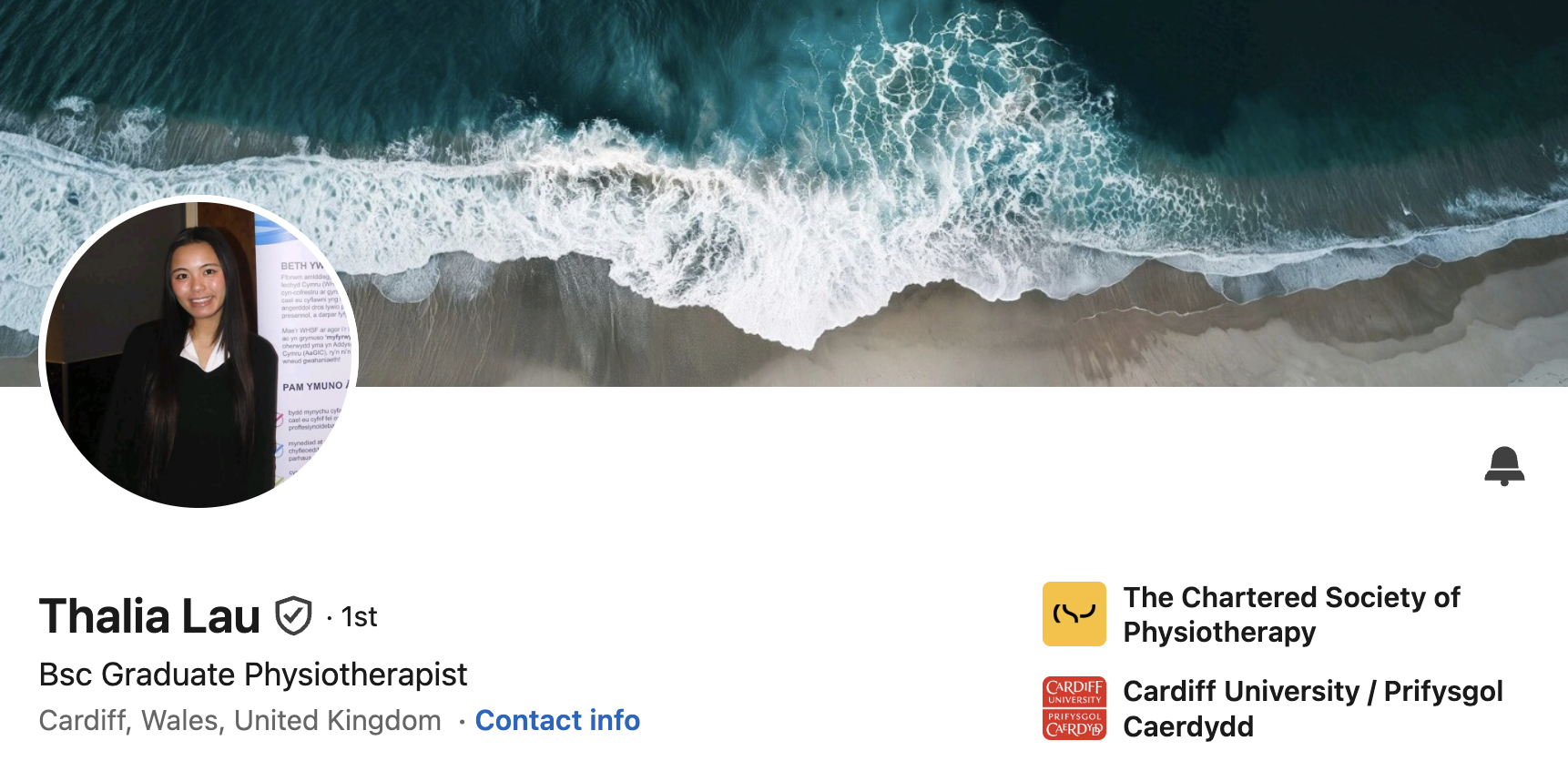
Click above to find Thalia on LinkedIn and connect with her.