
From Student to Graduate: Building Your Professional Identity Before You Qualify — Meet Dielle DeSouza.
If you've spent any time around physiotherapy students on LinkedIn, there's a good chance you've come across Dielle DeSouza.
A Cardiff University physiotherapy graduate, Dielle is currently working as a Personal Trainer while looking for her first role as a physiotherapist. She's already building an impressive professional profile, having achieved First Class Honours in BSc Physiotherapy, completed Level 2 and Level 3 Personal Trainer qualifications and become involved in student representation.
She's also featured on the front cover of the CSP's Frontline magazine, alongside fellow Cardiff graduate Thalia Lau and senior physiotherapist Jennie Dayrit. Their feature Common Threads, explores how cultural heritage can shape physiotherapists' identities, experiences and approaches to patient care.
But what I find particularly interesting about Dielle's journey is how she's used her experiences, interests and professional connections to start shaping her career before and beyond graduation.
From clinical placements and personal training to exploring paediatrics and sports MSK, Dielle has embraced opportunities to develop her professional identity.
And LinkedIn has played an important part in sharing that journey.
I asked Dielle seven questions about her journey through physiotherapy, the transition from student to graduate, and how she's using LinkedIn to build her professional network.
1. Looking back at your time studying physiotherapy at Cardiff, what's one lesson or experience that has shaped you most, and how have you shared that journey on LinkedIn?
‘My most defining experience was managing complex patient care across diverse placements, particularly in Acute Orthopaedics and Care of the Elderly where I achieved top marks. It taught me that clinical excellence relies as much on empathy and communication as it does on clinical reasoning. I learned to treat the person, not just the condition. On LinkedIn, I have shared candid reflection posts about transitioning through these placements, celebrating milestones like my First Class Honours, and discussing key takeaways from student leadership roles. Sharing these honest insights allowed me to engage with established healthcare professionals, document my professional development transparently, and encourage fellow students navigating the same path.’
2. You studied for a personal trainer qualification alongside your physio degree. What inspired you, and how do you see the two complementing each other?
‘I wanted to bridge the gap between acute medical rehabilitation and proactive, long term physical conditioning. While my physiotherapy degree at Cardiff gave me a deep clinical foundation in anatomy and injury management, gaining my Level 2 and Level 3 Personal Trainer qualifications gave me advanced tools in strength training, exercise prescription, and habit formation. The two disciplines complement each other seamlessly. Physiotherapy allows me to diagnose, adapt, and safely guide recovery, while strength and conditioning principles empower clients to build resilience, prevent future injury, and perform at their absolute best beyond hospital or clinic walls.’
3. You've featured on the front cover of the CSP's Frontline magazine. What did that experience mean to you, and how has LinkedIn helped you share your story and perspective?
‘Featuring on the cover of CSP Frontline magazine was an incredibly humbling moment and a huge highlight of my time as a student rep. It gave me a visible platform to represent student voices and champion equity in education and healthcare systems. LinkedIn became the primary engine for extending that conversation beyond the print cover. By posting about the feature and sharing my key messages around student advocacy and professional development, I was able to connect with senior leaders across the NHS and private practice, spark meaningful discussions around healthcare policy, and show other students that their collective voice carries real weight.’
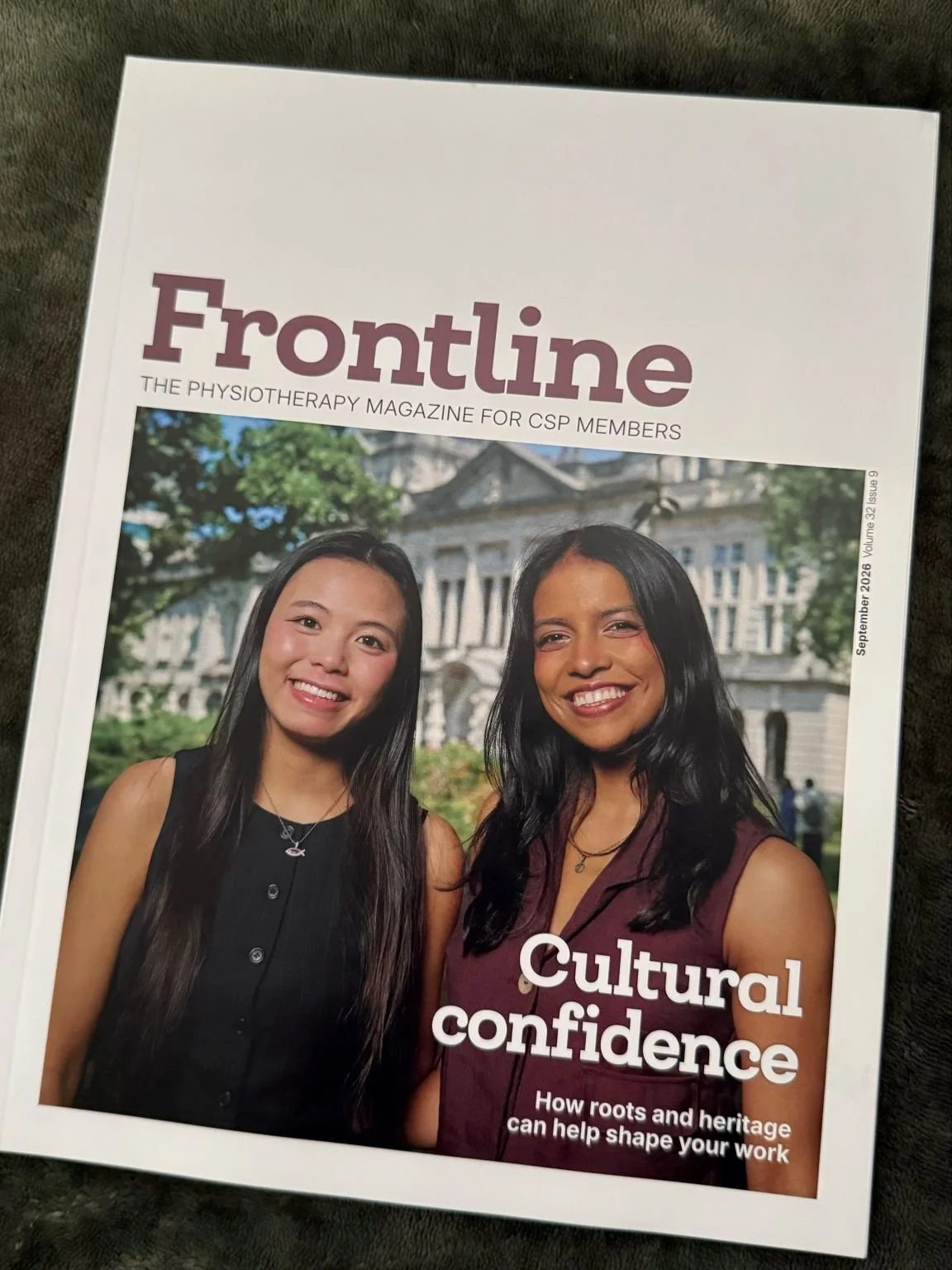
Dielle (right) appearing alongside her good friend, Thalia Lau, on the front cover of Frontline: the physiotherapy magazine for CSP members.
4. The move from student to graduate can be challenging. How have you found job applications and interviews, and has LinkedIn played a role in finding opportunities or connecting with others?
‘Transitioning from student to graduate is definitely an adjustment, but approaching it with a growth mindset makes it an exciting process. Applying for clinical roles requires showcasing both technical competence and soft skills like active listening and teamwork. LinkedIn has been an invaluable asset during this transition. Rather than just applying for roles blindly, I use LinkedIn to research team cultures, connect directly with clinical leads, and follow organisations doing innovative work in healthcare and fitness. Reaching out to clinicians for informal advice has given me clarity on the job market and created opportunities that wouldn't have appeared on traditional job boards.’
5. You're interested in both paediatrics and sports MSK. How are you exploring these interests and using networking to help shape your next steps?
‘I am deeply passionate about both areas, and my background reflects that balance. I explored paediatrics through my work as an activity leader with Premier Education and tutoring students online, while my sports MSK interest grew through pitch-side first aid with my local football team and my MSK outpatient placements. To shape my next steps, I actively use LinkedIn to follow clinical specialists in pediatric sports medicine and sports MSK, join relevant interest networks, and attend industry events like the CSP and HEIW conferences. Networking with clinicians who work at the intersection of youth athletic development allows me to learn from their career trajectories and map out my own hybrid path.’
6. Who should people in the physiotherapy or wider AHP community be following on LinkedIn, and why?
‘The AHP community should focus on following three key groups. First, student advocates and professional body representatives who share fresh, grassroots perspectives on education and equity. Second, specialist clinical researchers and strength & conditioning coaches who post evidence-based practice breakdowns, helping us bridge clinical research with real-world exercise application. Third, healthcare leadership groups like the Chartered Society of Physiotherapy (CSP) and Health Education and Improvement Wales (HEIW). Following this mix keeps your feed balanced with clinical updates, policy shifts, and practical career inspiration.’
7. What's your favourite LinkedIn feature, and how do you use it, or how could other students and new graduates use it to their advantage?
‘My favourite feature is the personalised connection request combined with direct messaging. It turns LinkedIn from a passive resume site into an active networking tool. My advice to students and new graduates is to never send a blank connection request. Always add a short note explaining who you are, what you admire about their work, or a specific question about their career journey. People in healthcare are remarkably generous with their time if you show genuine curiosity. Using messages to request short informational chats or advice on clinical pathways is one of the most effective ways to build a professional network before you even graduate.’
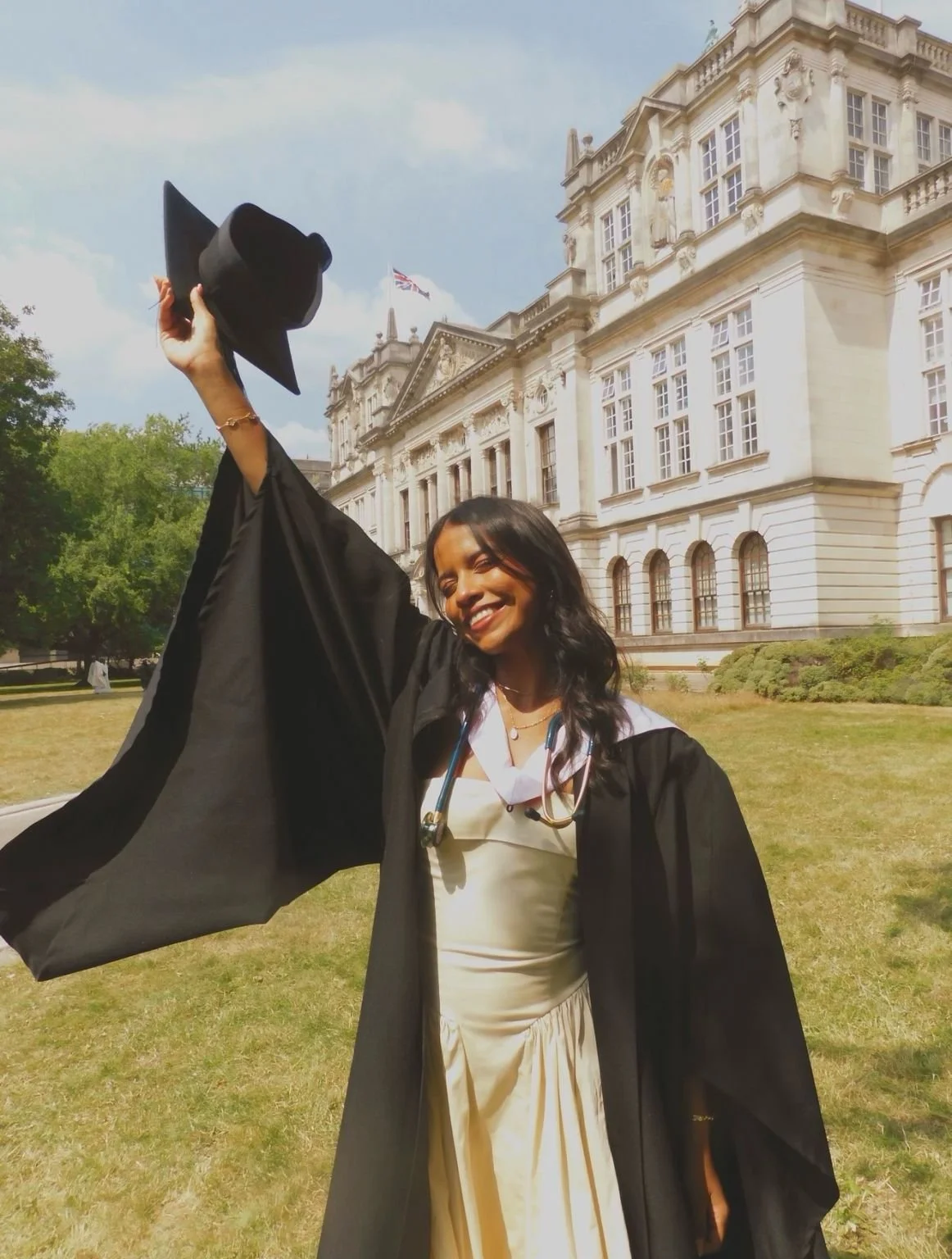
Dielle’s graduation day!
7 take aways from Dielle's story
1. You don't have to wait until you qualify to build your professional identity.
Dielle was sharing her experiences, reflecting on placements and connecting with healthcare professionals while still a student. You can start building your professional reputation long before your first job.
2. Your background and experiences can make you a better clinician.
Dielle's story in the CSP's Common Threads feature highlights how cultural heritage, language and lived experiences can influence the way we connect with patients and deliver person-centred care. Your experiences are part of your professional identity, too.
3. Look beyond your degree.
Dielle's personal training qualifications have given her additional skills and perspectives that complement her physiotherapy background. Professional development doesn't have to stop at the boundaries of your course or job title.
4. LinkedIn can help you navigate the transition from student to graduate.
Dielle is currently working as a personal trainer while looking for her first physiotherapy role. She's using LinkedIn to research potential employers, connect with clinical leads and learn more about different career pathways. It's a useful reminder that LinkedIn can support you through career transitions, not just help you find a job.
5. You don't need to have your career mapped out.
Dielle has interests in both paediatrics and sports MSK. Rather than feeling she has to choose one straight away, she's exploring both, learning from others and building connections that could help shape her future career.
6. Build a balanced LinkedIn feed.
Following a mixture of student advocates, clinical specialists, researchers, professional bodies and healthcare leaders can help you stay informed, discover new perspectives and find inspiration.
7. Never underestimate the value of a personalised connection request.
Dielle's advice is simple: don't send a blank connection request. Introduce yourself, explain why you'd like to connect and show genuine interest in the other person's work. A short message could be the start of a valuable professional relationship.
A huge thank you to Dielle for sharing her experiences and insights. I look forward to seeing where her physiotherapy journey takes her next.
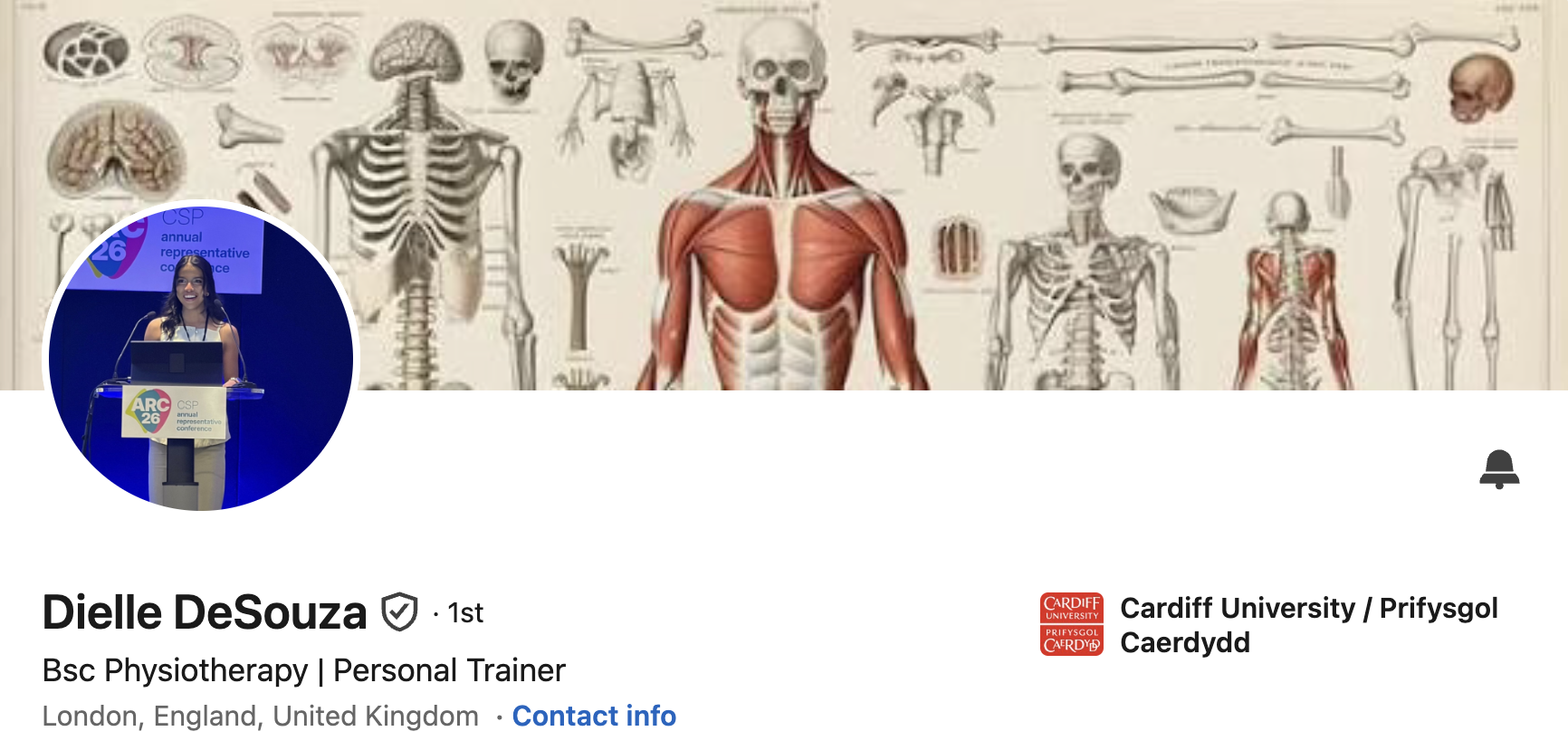
Please click on the image above to land on Dielle’s LinkedIn profile, and connect with her.