
Diane McGrill on standing out, sharing knowledge, and how she secured her 1st band 5 physio role.
400 applications.
8 interview invitations.
And one important message from a newly qualified physiotherapist: don't keep the things you've learned to yourself.
Getting that first offer isn't always straightforward. For Diane McGrill, a recent graduate from the University of Winchester, the journey has involved building confidence, making connections and understanding what employers are looking for.
Diane has just secured her first role as an MSK physiotherapist at Fareham Community Hospital. I spoke to her about the realities of finding work as a newly qualified physio, and how she really wants to share this with those who are still job hunting.
I listened to Diane speak as she fed back her findings from the annual CSP conference to her regional CSP network. And I just had to reach out to learn more.
Finding her place in physiotherapy
Diane returned to full-time education as a mature student, leaving full-time employment to pursue physiotherapy.
In a recent article for the Chartered Society of Physiotherapy (CSP), she reflected on the challenges, including moments of self-doubt and questioning whether she belonged.
But, as she wrote:
“This journey was never just about me. It was about giving back. I committed to the experience and, along the way, I found my people and my place.”
During her studies, Diane became a CSP student representative and later regional student representative for South Central England. These roles gave her opportunities to advocate for students, attend conferences and build connections across the profession.
You can read more about her journey in the CSP article, New Beginnings.
Those connections would prove valuable as graduation approached.
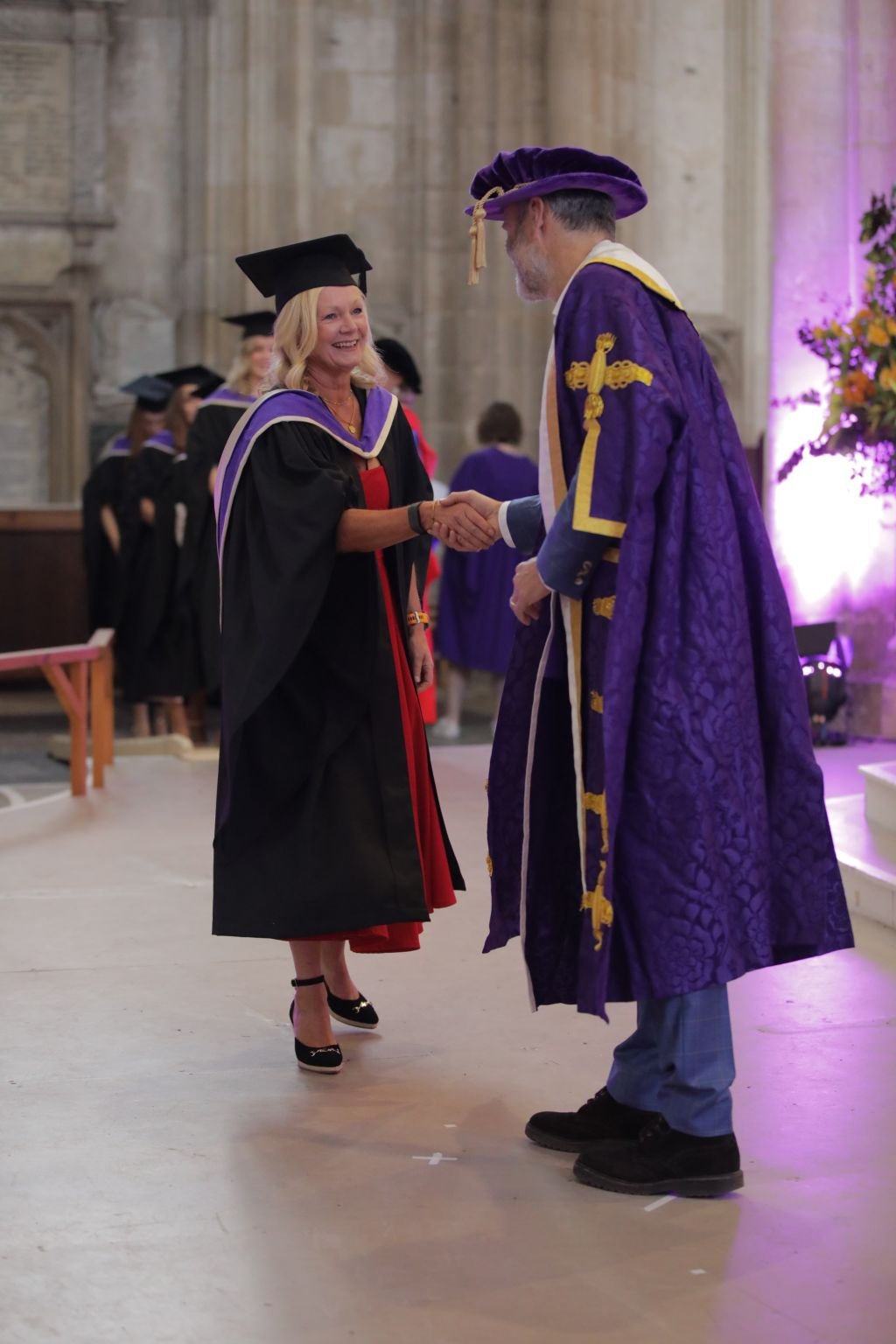
Diane on graduation day.
The reality of getting that first job
The competition for newly qualified physiotherapy posts is something I regularly hear about from students and graduates.
For the NHS post she secured, there were more than 400 applications. 52 candidates were shortlisted, with just 8 invited to interview. Only 3 people were recruited.
These figures relate to that particular recruitment round, but they give an idea of how competitive the process can be.
Diane noticed that some students were reluctant to share what they'd included in their applications or how they'd approached recruitment.
As she explained:
“The content included in applications seems to be becoming a closely guarded secret.”
It shouldn’t feel like a competition, but that’s how people seem to be approaching the job market. Diane however, takes a different approach, choosing to share what she's learned:
“I don't think it's necessarily in my application form where I got the job. Physiotherapy is person-centred, and it's all about how I interview and how I come across to people. Do they really want me working for them? Can they get on with me? Have I got the attributes?”
Making your application stand out
One of Diane's most useful suggestions was to use the job description and person specification to structure your supporting information.
Rather than writing a general statement and hoping it covers everything, use the requirements of the role as your framework. Identify the skills and attributes being requested, then provide examples of how you meet them.
Those examples don't have to come from previous employment. University learning, clinical placements, additional courses and other relevant experiences can all demonstrate what you bring.
Diane explained:
“Use the template that the NHS gives you, then use the headers when filling in your information, to make it absolutely clear that you're meeting the requirements. This will really help your score.”
When you all have the same starting point, using these headings, it’s up to you how you answer them. That’s exactly what The LinkedIn Physio and my collaborators (Cygnets Placements, Beyond Preceptorship and Recruit Therapists) are looking to support with.
Sharing a useful approach can help someone present their experience, but the evidence and examples need to be their own. I’m here to help you generate ideas as you progress through your degree and beyond.
Diane also highlighted the value of keeping your CV, personal statement and CPD records up to date. Her university had included teaching on employability, leadership and interview preparation, helping her understand what employers were looking for.
Her wider message is a simple one: don't make the person reading your application work out why you're suitable. Show them how amazing you are.
Start building your network before you need it
Diane's CSP involvement gave her opportunities to meet clinicians and other professionals at conferences and events. She found that people were often generous with their time, offering contact details and encouraging her to get in touch if she needed advice.
But approaching people isn't always easy, however, as Diane put it…
“It’s like having the courage to talk to strangers, after being told never to talk to strangers!”
It's easy to spend an event talking only to people you already know. But starting conversations with someone new can lead to advice, support and opportunities you might not otherwise encounter.
In Diane's case, a recommendation from a previous practice educator was an important part of the route to her new role. That educator recognised her strengths and encouraged her to apply.
It wasn't simply about having a big network. It was about building relationships and making a positive impression.
Where does LinkedIn fit into all this?
Diane hadn't always used LinkedIn regularly, but university teaching around CPD and leadership had introduced her to the platform. More recently, she'd become increasingly active and could see the value of having a professional presence.
She was particularly keen on students starting to build their networks early, rather than waiting until they were looking for work.
As she put it:
“It's never too soon to start things, but growing your network early will really help.”
And:
“Letting people see your face will help them to get to know and remember you.”
That doesn't mean everyone needs to become a content creator or post every day. It's about making connections, following people and organisations you're interested in, and gradually becoming more visible within the profession (Diane… you’re doing my job for me here… I might hire you at some point!).
She also noticed that some graduates hadn't updated their LinkedIn profiles since their first year at university.
Her observation was the same as mine:
“Keep your profile up-to-date, so that recruiters know when it’s the right time to approach you.”
Again, I talk about this in my sessions. If a recruiter lands on your profile now, what will they see? Does your profile reflect where you are now, what you've been involved in and the professional you're becoming?
You don't need a perfect profile. But you should make it easy for people to see your story.
Don't keep everything to yourself
What stayed with me most from my conversation with Diane wasn't just her advice about applications, interviews or LinkedIn. It was her willingness to share what she'd learned.
The job market is competitive, but that doesn't mean students and graduates need to treat one another as rivals or keep useful advice to themselves.
If you're approaching graduation or looking for your first role, take a few things from Diane's experience:
Use the job description as your framework. Show how you meet the requirements with relevant examples.
Keep a record of your development. Your placements, CPD and wider experiences all contribute to your professional story.
Prepare for the interview early. Think about the experiences you'll want to talk through.
Build your network before you need it. Start conversations and make connections throughout your studies.
Keep your LinkedIn profile current. Make it easy for people to understand where you are in your career.
Share what you've learned. Helping someone else doesn't diminish what you've achieved.
Diane has secured her first physiotherapy post, but she's also keen to help those coming through behind her. That's exactly the kind of attitude that strengthens a profession.
Congratulations, Diane, and thank you for being so open about your experiences. I'm sure your advice will be valuable to plenty of students and new grads navigating their own next steps.
Click above and connect with Diane on LinkedIn!